
Refracted Revolution
The war you didn’t learn in school

Two weeks ago I spent every evening with Ken Burns’s The American Revolution. Seven to nine, then again at nine when it repeated. My days were filled with it too — looking forward to the night’s episode, thoughts circling until they rolled into a weekend starting this essay. I didn’t have time for it, but the muse waits for no one.
The word that kept returning was refracted: light bent through glass, altered in angle and color, still itself but changed. That was how the week felt — history refracted through Burns, fiction refracted through Diana Gabaldon, resonance refracted through my own ledger.
I remember wondering when we’d move to the war in the South. Then the episode arrived, and the reason came clear: the British realized they couldn’t win in the North or mid‑Atlantic, so Clinton ordered the campaign to begin in Georgia and move north. Better some land and victory than none. I don’t remember that from school. And what a trap it was at Yorktown — Cornwallis driven northward, expecting relief, only to be encircled by Washington and Rochambeau on land and cut off by de Grasse at sea. The southern gamble ended in surrender.
Other jaw‑droppers landed too. The promises the British made to the enslaved — fight for us, and we will give you freedom. The Patriot treatment of Native Americans — burning towns and fields on Washington’s orders. These weren’t footnotes; they were ruptures bent into clarity, omissions from the education I received.
Burns pressed another truth: the founders recognized education as scaffolding. They knew democracy required citizens who could read, reason, and act. That point landed hard, layering into my own ledger of civic literacy.
And then the global resonance: this Revolution sparked others for two centuries. France, Haiti, Latin America — rupture echoed outward. It was not only America’s war; it was a proxy war between Britain and France, fought on American soil, refracted through alliances and naval battles. Without France, the Revolution might not have survived.
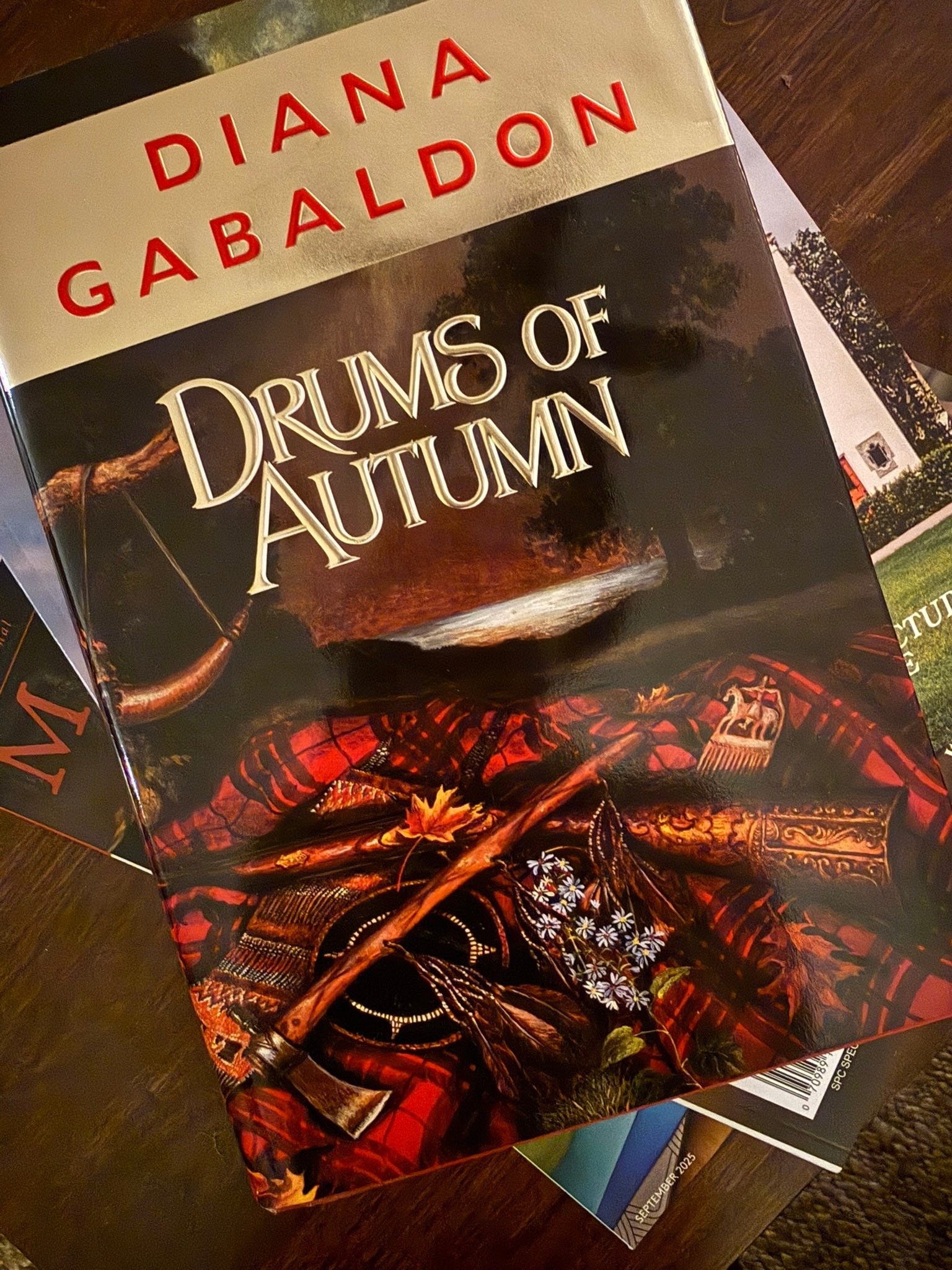
At the same time, I kept seeing Claire and Jamie everywhere. Ticonderoga, Saratoga, Monmouth — fiction stowed away in the Revolution’s geography. That was when the overlay clicked: Gabaldon’s saga bending intimacy into battles, Burns’s maps turning violence into continuity. Camden, Yorktown — I wondered if Claire and Jaime would appear there too.
Greene pressed in as endurance. Retreats became survival, attrition became strategy. Washington trusted him more than anyone. Arnold brilliant then broken, Gates hesitant, Adams clipped, Abigail steady, Jefferson visionary. Leadership uneven, contrapuntal.
I carried my own maps too. Gateway National Recreation Area in New York Harbor — fortifications I walked years ago, reminders of 1776 when defense collapsed. Naval strategy reactive then, outward later. Yorktown as a visit long ago, when I needed a break from graduate school. Saratoga as a trip I have yet to make.
And beneath it all ran the undercurrent of slavery. Washington taking one of his enslaved body servants with him. Another wounded in both knees, not freed but made into a cobbler because he could sit all day. The Revolution promised liberty, but its scaffolding was built on contradiction. Freedom for some, bondage for others. That tension was never resolved, only carried forward — into the civil war, into Reconstruction, into Jim Crow, into the reckonings we still live with. Burns didn’t let me look away, and neither did the week I spent with him. The rupture refracted into resonance, both in history and in me.
You can watch Ken Burns’s The American Revolution now on PBS.org and the PBS App, with PBS Passport required after December 8, or through the PBS Documentaries channel on Prime Video.
If you’d like to respond, just hit reply to this email—I’d love to hear your thoughts.
Filed under: an irregular series on art and resonance.